

Since I was a teenager, I had dreamed about living abroad and joining an exchange program, but I kept postponing it because of the cost. In December 2014, I made up my mind and decided that I wasn’t going to put my dreams off again. So I started looking for an exchange program that I could afford.
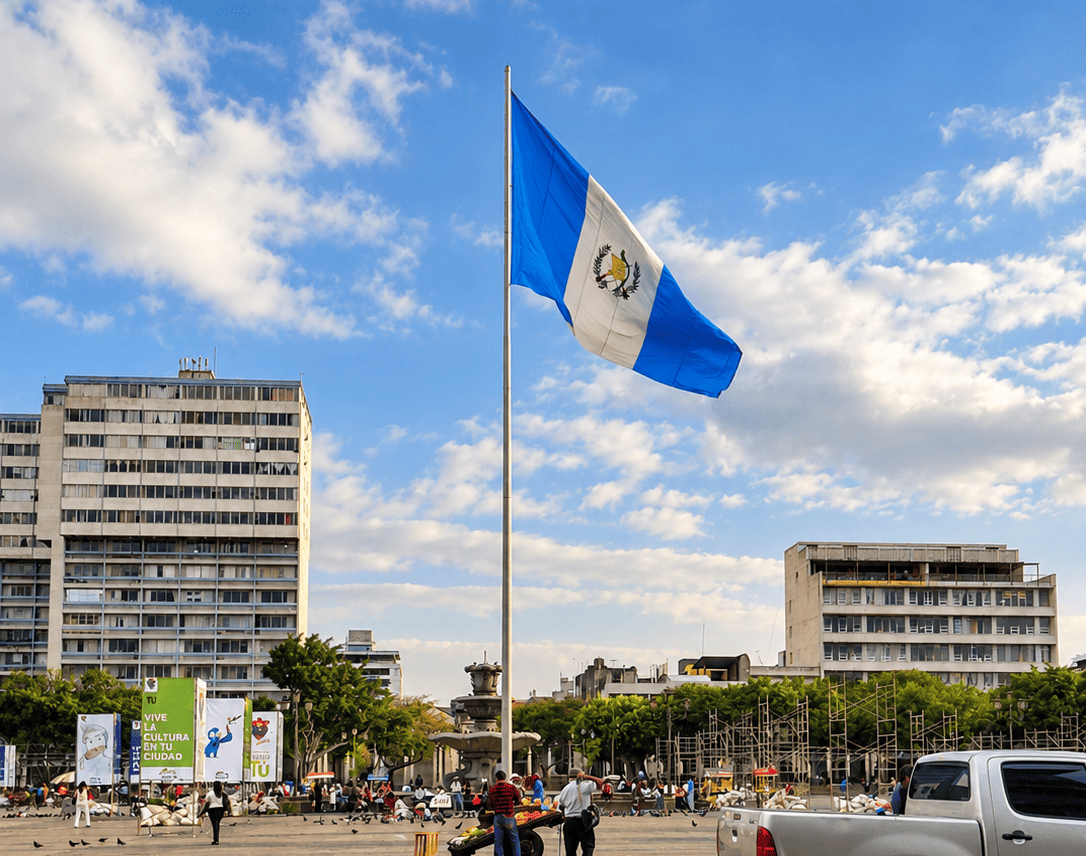
Honestly, I wasn’t looking for Guatemala. I actually didn’t know much about the country, and Spanish wasn’t a language that I really liked at that time. However, while searching for AIESEC programs, I found one in Guatemala that was related to marketing, and the internship was a match for what I was looking for. Within just a month, despite knowing almost nothing about the country, I decided to go and discover it for myself.
My family was concerned about letting me go there alone, but I was sure about my decision and did a lot of research about the place.
One important thing about this trip is that even though I’m Brazilian and speak Portuguese, I had never studied Spanish before going there. I was just confident that I had enough English to get through the experience, and I was hoping everything would work out.
I didn’t know it at the time, but I was about to experience my first real Spanish immersion.
Arriving in Guatemala
In March 2015, I started this journey, and it was exciting from the very beginning.
When I arrived in Guatemala, while I was going through immigration, I forgot to show my return ticket. They sent me to a room to speak to an official. They didn’t speak English, and I didn’t know a word of Spanish.
It was difficult to get out of that situation, but after a lot of gesturing and attempts to communicate in English, they eventually let me go.
AIESEC had provided me with a buddy who was going to give me a place to stay on my first day and take me to the city where the internship was located.
When I arrived at his house, his mother didn’t speak English, so we couldn’t communicate well. I tried using some Portuguese, but that was difficult as well.
Not only was the language different, but the food was something I wasn’t familiar with either. My first breakfast was bananas with beans, and it looked like Brazilian brigadeiro. I ate it thinking it was something sweet, but it was actually salty.
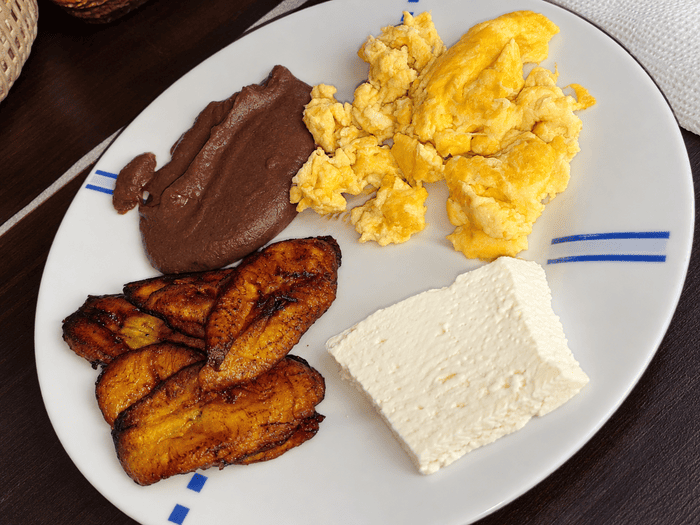
It was a small moment, but it was also a reminder that I was really somewhere different.
Spanish Became Part of My Everyday Life
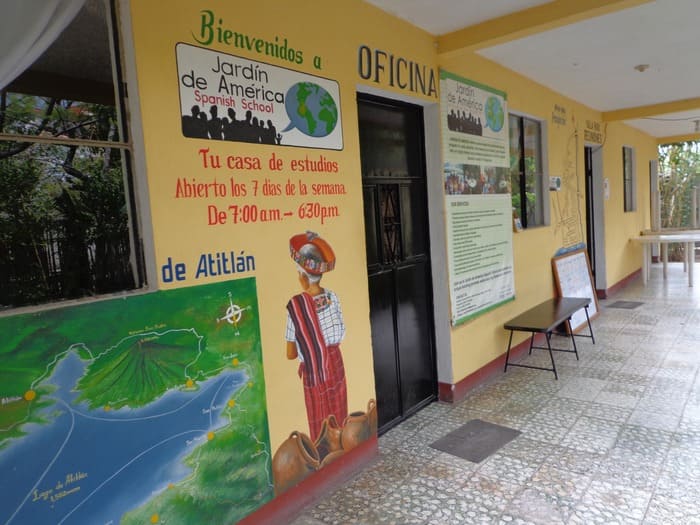
The internship was at a Spanish school located in Panajachel, about two hours away from my buddy’s house in Guatemala City.
I started my internship alone, but after one week, another exchange student arrived. She was from Germany.
The exchange program was divided into two parts. In the morning, we needed to work, and during the afternoons, we studied Spanish with a local teacher.
Our main assignment was to translate the school website into German and Portuguese and improve its design.
The German student told me that she had participated in another exchange program in Mexico and really wanted to improve her Spanish. So we made a pact: until our last day there, we would only speak Spanish.
At first, we sometimes had to use English or gestures. I often resorted to portunhol — a mix of Spanish and Portuguese — and my colleague was sometimes left completely confused.
But we kept trying.
Even when we didn’t know how to say something, we did our best to communicate by using other words and simplifying our sentences in Spanish.
I was surrounded by Spanish almost all day.
I lived at the school, and the owner only spoke Spanish to us. The woman who cooked for us didn’t speak Portuguese either. On weekdays, I also had around three or four hours of Spanish classes in the afternoon.
Even after class, I kept studying.
The classes were important, but they were only part of the experience. Most of my learning happened because I had to use Spanish outside the classroom too.
I wasn’t simply studying Spanish. I was using it to eat, work, ask questions, solve problems, meet people, and get through my everyday life.
As I am Brazilian, sometimes I used Portuguese words instead of Spanish, and people could understand me. But I realized that I wasn’t afraid of making mistakes. I was just trying to communicate, no matter what happened.
It wasn’t easy to understand what the locals were saying. I had problems even ordering food.
In 2015, we didn’t have digital banks, so to exchange money we needed to go to a physical bank. My first attempt was a real disaster, but eventually, exchanging money became just another everyday task.
The everyday situations that had seemed difficult at first gradually became normal.
I stopped trying to translate things in my head, and words started coming to me naturally.
And then, week after week, my Spanish started to improve.
I Was More Afraid of Making Mistakes in English
One weekend, we had an AIESEC event where, in teams, we had to participate in some games.
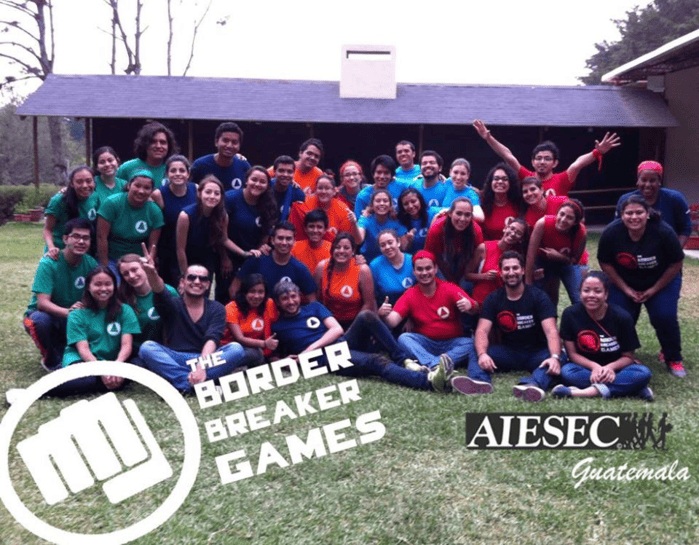
People told me that I could communicate in English, but I was more afraid of making mistakes in English than in Spanish. So I tried even harder to speak Spanish during the games.
Looking back now, I realize that I was afraid of not being good enough in English because I felt that people had expectations about my English skills.
Spanish was different.
I was a beginner, and everyone knew it.
I didn’t feel like I had anything to prove.
My attempts were genuine, and because I wasn’t afraid of being judged, I could simply try. After all, no one really expected me to be able to speak Spanish yet.
That changed something in me.
I stopped worrying so much about whether I was speaking correctly and started focusing on whether I could make myself understood.
And that made it much easier to keep speaking.
From Almost Zero to Intermediate
After that weekend, I noticed my Spanish improving even more, and I lost whatever fear remained in me.
I could travel to the beach completely by myself.
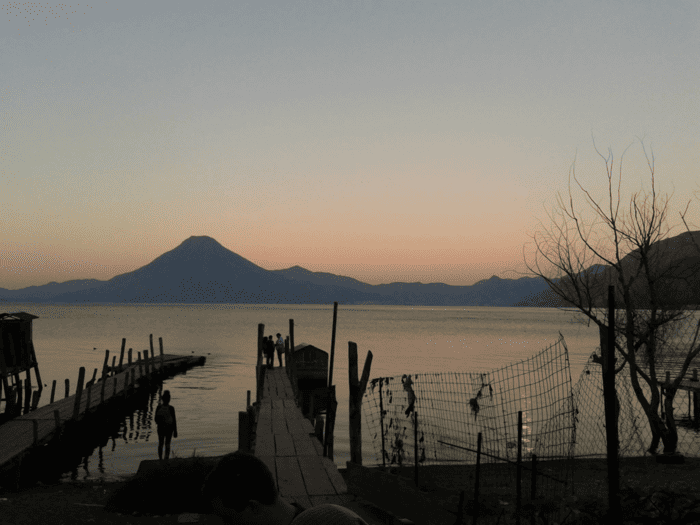
Asking for directions wasn’t challenging anymore.
I even managed to buy medicine at the pharmacy.
These might sound like small achievements, but for someone who had arrived in Guatemala without knowing any Spanish, they felt huge.
At the end of my exchange, I took a placement test at the school, and it showed that I had reached the intermediate level.
I think I had never felt so proud of myself before.
Of course, this was my personal experience, not a formula for reaching an intermediate level in 45 days.
What made the difference for me was the intensity of the immersion.
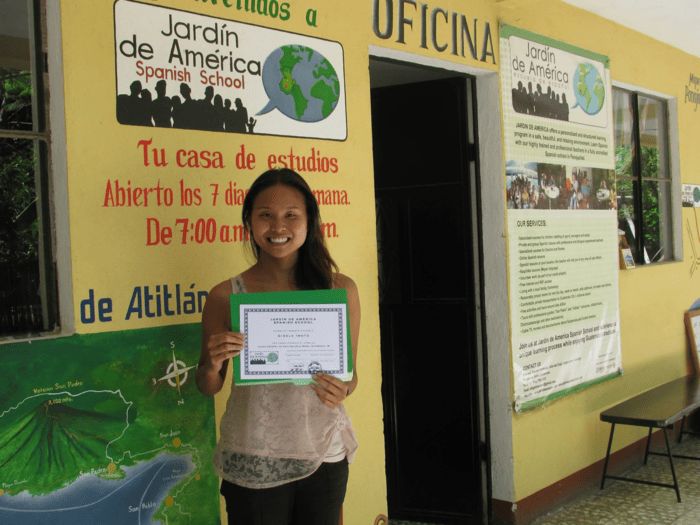
I was exposed to Spanish every day, had several hours of classes, studied outside class, made mistakes constantly, and most importantly had to use the language in real situations.
Before going back to Brazil, I stayed at my buddy’s house again, and I could talk to his mom. She said that my Spanish had improved a lot.
I remembered my outbound flight.
I couldn’t even understand what the flight attendant said when she asked which breakfast I preferred.
But on my return flight, things felt completely different. I was thinking in Spanish, and I only realized how much things had changed when I arrived at São Paulo airport.
I heard an announcement in Portuguese, but the words in my head were still in Spanish.
For a moment, I actually had to consciously switch back to Portuguese.
For the next few weeks, I still found myself thinking in Spanish from time to time.
It felt strange to be back home while my mind was still switching languages.
What This Experience Taught Me About Learning a Language
Looking back at that experience years later, I think the language itself was only part of what I learned.
- You don’t need to feel ready to start speaking a new language.
If I had waited until I knew enough Spanish to start speaking, I probably wouldn’t have learned nearly as much. I had to speak before I felt ready.
- Immersion works because it turns language into a necessity.
When Spanish became the language I needed for everyday life, I couldn’t simply put it aside when I didn’t understand something. I had to try again, find another way to say it, listen carefully, and keep going.
- Deliberate practice becomes easier when it is part of everyday life.
I wasn’t spending every hour sitting with a textbook. I was practicing while eating, working, traveling, asking for directions, talking to people, and solving small problems. The language was everywhere.
- Being a beginner can be liberating.
This might be the biggest lesson I took from the experience. When I was speaking English, I sometimes felt that I had something to prove. When I was speaking Spanish, I didn’t. I was a beginner. Everyone knew it. So I was free to make mistakes.
And perhaps that was exactly what I needed to finally become comfortable speaking.
This experience taught me much more than a language.
It showed me that I could adapt, communicate, solve problems on my own, and enjoy my own company.
More importantly, it showed me that I didn’t have to wait until I felt ready to try something new.